Celebrating Its 23rd Anniversary – S&W Promotes Three New Partners and Launches New Website

by Gerald Sauer

On the 23rd anniversary of its founding, Sauer & Wagner LLP is pleased to announce the promotion of Gregory Barchie, Amir Torkamani and Sonya Goodwin to Partner.  

Gregory Barchie has substantially litigated commercial, entertainment, real estate, employment, and intellectual property disputes in federal and state courts and in private arbitrations. Greg joined S&W in 2015 and has served as a member of the Board of Governors of the Beverly Hills Bar Association, President of the “Out of Court” section of the Beverly Hills Bar Association, and President of the Southern California Business Litigation Inn of Court. He successfully defended a guarantor on a multi-million-dollar loan case involving the “sham guaranty” doctrine and prevailed on several anti-SLAPP motions including against claims for breach of contract/lease in an environmental contamination case, and fraud and intentional interference with economic advantage in a dispute between a borrower and mortgage loan brokers.

Amir Torkamani, who joined S&W in June 2012, focuses on commercial, entertainment, real estate, employment, and intellectual property litigation and has substantial experience handling jury and bench civil trials in federal and state courts, as well as litigating disputes in private arbitrations. He was recognized for obtaining one of the Top 100 Jury Verdicts in California in 2019 and was named a Rising Star by Southern California Super Lawyers in 2013 – 2018. Amir’s successes include the favorable settlement of a multi-million-dollar real estate dispute involving return of a substantial security deposit after the tenant had failed to pay rent and substantially damaged the property, as well as a commercial lease dispute involving a tenant facing eviction and substantial interruption of a machining and product development company.
Amir received a Bachelor of Arts degree in political science and a Bachelor of Science degree in business administration, both at the University of California, Berkeley. He earned his J.D. from the University of Southern California.

Sonya Goodwin joined S&W at the end of 2019. She has focused her practice exclusively in the employment arena, counseling both employers and employees in a wide variety of employment issues including wage and hour issues, discrimination, harassment, retaliation, wrongful termination, defamation, intentional infliction of emotional distress and breach of contract, as well as conducting investigations of workplace issues. She serves on the Executive Committee of the Beverly Hills Bar Association’s Labor and Employment Law Section.

Sonya earned her Bachelor of Arts degree, in history and international studies, from the University of California, San Diego. She attended UCLA School of Law, where she received her J.D.

S&W also released its redesigned website as part of the celebration of its 23rd anniversary. The website is located at www.swattys.com.   

For Lawyers, Social Distancing Could Be the New Normal: Gerald Sauer’s article for Law.com

For legal professionals, this new virus has completely rewritten how business is done. Courthouses are closed, office buildings are empty and a lot of things that once were urgent have suddenly been put on indefinite hold.

by Gerald Sauer

The novel coronavirus pandemic is reshaping our world in ways large and small, from compulsive hand washing to take-out meals to home-schooling. As we’re all forced to shelter in place, we find ourselves connecting with others in ways we may not have known about (e.g., Zoom), and in ways we never truly appreciated (e.g., email, texting, messaging).

For legal professionals, this new virus has completely rewritten how business is done. Courthouses are closed, office buildings are empty and a lot of things that once were urgent have suddenly been put on indefinite hold. We no longer meet in person with clients, we’ve stopped going to court, and we can’t even enjoy collegial get-togethers to exchange business cards and referrals.

Read full story on Law.com [Subscription Required]
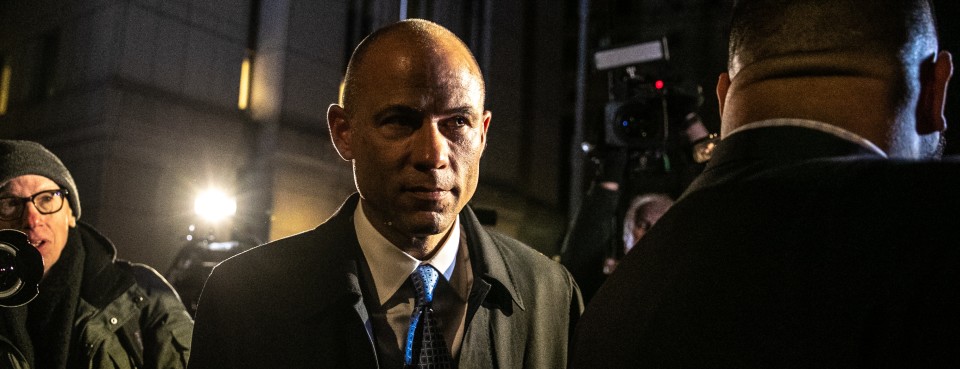
Michael Avenatti leaves the federal court in New York City.

Attorneys Should Relearn Rules of Civility: Gerald Sauer’s article for Bloomberg Law

Basic tenets of civility and decorum in the legal profession are being drowned out by a win-at-any-cost mentality, writes Gerald Sauer, founding partner at Sauer & Wagner LLP in Los Angeles. Legal rules, ethics standards, and principles of civility were established not for the purpose of being pushed and broken, but to ensure a system of fairness, he says.

by Gerald Sauer

Recently, a judge before whom I appeared told me that I had an “old-school sense of ethics.” Her comment took me by surprise, but upon further reflection I realized that she was right: I always wear a suit and tie to court; I stand up when I’m speaking to a judge, and I treat witnesses and opposing counsel with respect. I’m decidedly “old school.”

How sad. That I’m considered an outlier in my profession speaks to the pervasive degradation of the practice of law. In a society increasingly defined by the norms of reality TV, it seems to have become acceptable for lawyers to push buttons and break rules.

Read full story on Bloomberg Law

Job (In)Security: How to Manage Economic Uncertainty: Sonya Goodwin’s article for Glassdoor

The coronavirus pandemic might be the biggest threat to employees — and the economy — since the 2008 recession. Are you protected if your employer cuts back your hours or lays you off?

by Sonya Goodwin

Time Off? 

If you need time off because you or a loved one is affected by coronavirus, or if your place of work or child’s school is closed, you may get up to two weeks’ paid sick leave under a proposed law that passed the House on March 13 and is expected to clear the Senate. As currently drafted, the law covers employers with fewer than 500 employees but exempts smaller employers who can prove economic hardship.  

Some large employers are adopting policies to respond to the pandemic. On top of existing paid sick leave, Walmart will provide up to two weeks’ paid leave for ill or quarantined employees. Darden Restaurants, the parent of Olive Garden, will permanently provide paid sick leave to all hourly employees. State and local governments may also provide limited paid sick leave, and you might be eligible for state disability leave if you’re sick with coronavirus.

Read full story on Glassdoor.com

Planning for the Coronavirus in the Workplace

by Sonya Goodwin

Planning for the Coronavirus in the Workplace

With the recent news that there are now Coronavirus cases coast to coast, how to avoid getting infected is undoubtedly on everyone’s mind.  Employers and employees alike are battling how to deal with the Coronavirus in the workplace, from how to avoid infection, to how to handle absences from quarantined or infected employees.  Here are a few tips on how to handle these questions:

  1. Know the symptoms.     Make sure your workforce is educated on the symptoms, so they know when to stay home or see a doctor.  Information can be found on the World Health Organization’s website, https://www.who.int/emergencies/diseases/novel-coronavirus-2019, as well as the Center for Disease Control’s (CDC) website, https://www.cdc.gov/coronavirus/2019-ncov/about/symptoms.html.  Also, it is important to let employees know that they can stay home if they are exhibiting symptoms without receiving disciplinary action against them. 
  2. Take Precautionary Measures.  Educate your workforce on how to take precautionary measures.  Here are a few, but this is by no means an exhaustive list:
    1. Wash hands, use disinfectant wipes, and hand sanitizer (employers can make this available throughout the office);
    2. Don’t shake hands;
    3. Open and close doors using closed fists or hips, if possible;
    4. Cough or sneeze into a tissue;
    5. For employees more susceptible to infection (i.e. health care industry or heavy foot traffic) – use latex or nitrile disposable latex gloves when dealing with a lot of people or areas where they may come in contact with contaminated areas.
  3. A remote workforce?     Are there any employees who can work remotely?  If not currently, are there easy ways to make this possible?  While it may not be possible for all employees, allowing some employees to work from home may (1) relieve fears, and (2) reduce the likelihood of the virus spreading.  If things escalate, it may be a good idea to have an emergency work from home policy in place, to the extent possible. 
  4. Limit Unnecessary Travel.  Limiting exposure to public places like airports may help reduce the risk of contracting the virus.  Consider limiting business travel to events that are “necessary.”  Can in-person meetings be done over the phone or video-conference?  Or can meetings be postponed?  This may be particularly relevant if the travel involves cities or counties with current cases. 
  5. Know the law and adapt your policies.  The Federal Family Medical Leave Act (FMLA) and California Family Rights Act (CFRA) require employers of 50 or more employees to provide leave to employees with serious health conditions, and the Americans with Disabilities Act (ADA) and California’s Fair Employment and Housing Act (FEHA) also require employers with 15 or more, and 5 or more employees, respectively, to accommodate employees with disabilities or perceived disabilities.  It is unclear whether an employee infected, or under quarantine, would fall under the protections of the ADA and FEHA, but employers should nevertheless consider offering these accommodations, to the extent possible.  It is better to have an employee who may be infected stay home and know that his or her job is secure, than go to work infected for fear of losing his or her job.

This is not intended to instill panic; this is a developing issue, and the above is a non-exhaustive list of ideas to help businesses prevent disruption and plan for a more widespread outbreak of the Coronavirus or similar communicable diseases.  If you have any concerns about how to handle issues surrounding the Coronavirus in the workplace, feel free to contact us.

1 7 8 9 10 11 17